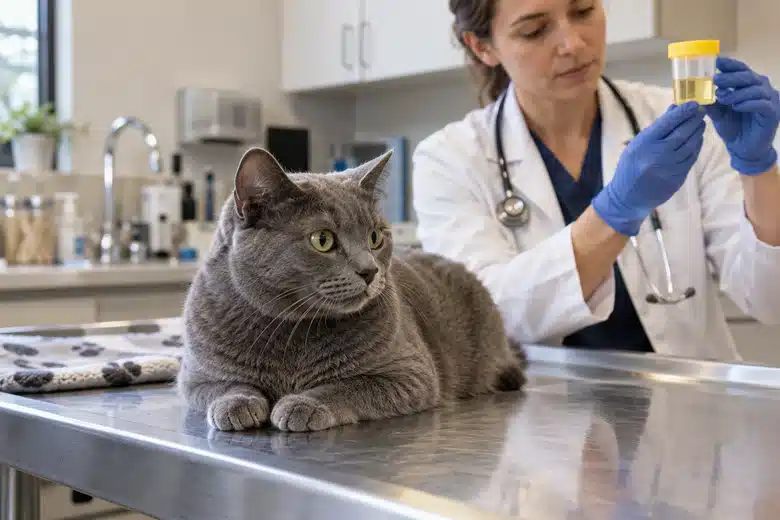
Does Pet Insurance Cover UTI Treatment?
Trace urinary signs, testing and prescriptions separately before deciding what a UTI claim includes.
What matters on this page
Use these checkpoints to frame the literal question before reading the full guide.
Pet insurance may reimburse eligible UTI treatment under the applicable illness terms, but “UTI” on an invoice does not settle timing, exclusions or each charge. Review first signs, prior urinary episodes, the diagnosis and selected benefits. A new confirmed infection and recurrent urinary signs need not present the same evidence.
The sections below show how to verify the answer and what can change it.
A cat that cannot pass urine needs urgent care
Cornell identifies feline urethral obstruction as an emergency. If a cat strains and produces little or no urine, seek immediate veterinary attention rather than waiting for a coverage answer.
Find the illness provision and prior-history definition
In the Pets Best Nevada sample, section 12.T considers prior advice, treatment and relevant signs in its pre-existing-condition definition. Section 8 separates selected examination and take-home medication benefits. These are examples of clauses to locate, not a UTI claim decision or proof of your state’s terms.
Build the medical timeline from the records: first observed difficulty, earlier urinary visits, test dates, diagnosis, medicine start and follow-up. Add policy start and the applicable waiting-period end in separate columns. If the old record says only “urinary signs,” retain those words rather than relabeling it as a confirmed infection or declaring it unrelated.
Ready to check current rates?
Keep policy terms, deductible, reimbursement and limits beside the quote so the comparison stays consistent.
An infection is not the only explanation for signs
Cornell describes several causes of lower urinary tract signs in cats, including inflammation, stones and obstruction. Urinalysis and, where needed, culture or other testing help the veterinarian investigate. This cat-specific information explains why symptoms should not be treated as a diagnosis; it does not determine insurance eligibility for a cat or dog.
Itemized UTI treatment audit
| Invoice item | Indication/history | Relevant provision | Inclusion/exclusion evidence | Unresolved question |
|---|---|---|---|---|
| Urinalysis | Investigation of current signs | Diagnostics and illness terms | Clinical notes plus applicable form | Is this diagnostic expense eligible? |
| Culture | Investigation of suspected infection | Laboratory benefit and history rules | Order, result and invoice | Does the contract distinguish this test? |
| Prescribed treatment | Veterinarian’s diagnosis and plan | Medication benefit and exclusions | Drug, prescription, formulary and schedule | Is take-home medication included? |
| Recheck | Follow-up on this episode | Visit fee and testing terms | Separate exam/test line items | Does the fee require an option? |
Culture
Prescribed treatment
Recheck
Handle recurrence as a records question
If the pet has had urinary symptoms before, do not assume that a later date alone makes the new episode eligible. Ask which facts and contract wording connect or separate the episodes. A different test result can be relevant medical evidence without automatically deciding the contractual issue. Let the veterinarian describe the medical relationship accurately.
Keep the culture charge apart from the prescribed drug and the follow-up visit. If one line is excluded or subject to an unselected option, that does not by itself establish the answer for every other line. Conversely, reimbursement of a test does not guarantee payment for all later treatment. Ask for an item-by-item explanation tied to the contract.
Questions that can produce a usable answer
Do not alter or postpone veterinary care to improve the appearance of an insurance timeline. Save the original invoice, prescription and clinical notes. If a claim explanation is unclear, compare the stated reason with those documents and the policy’s review procedure. This guide does not prescribe antibiotics or decide whether a particular episode is bacterial.
Coverage remains individual
The applicable issued schedule, state amendment and clinical claim file are not available here. A sample policy can guide the audit but cannot promise reimbursement for this pet’s UTI treatment.
Common questions
Are urinary stones the same as a UTI?
No. Similar signs can have different causes; the veterinarian’s diagnosis and records matter.
Does a later diagnosis erase earlier signs?
No. Preserve the actual timeline and read the policy’s history definition.
Independent references
These links provide independent government, academic or reference background. Actual policy wording controls insurance eligibility, benefits and claims.
Ready to compare with clearer inputs?
Keep the policy terms beside the price, then continue to rates when the comparison is clear.